Nutritional Medicine · First Nations Australia × Modern science
Reading the Land's Instructions: Precision Nutrigenomics and Inflammation
read
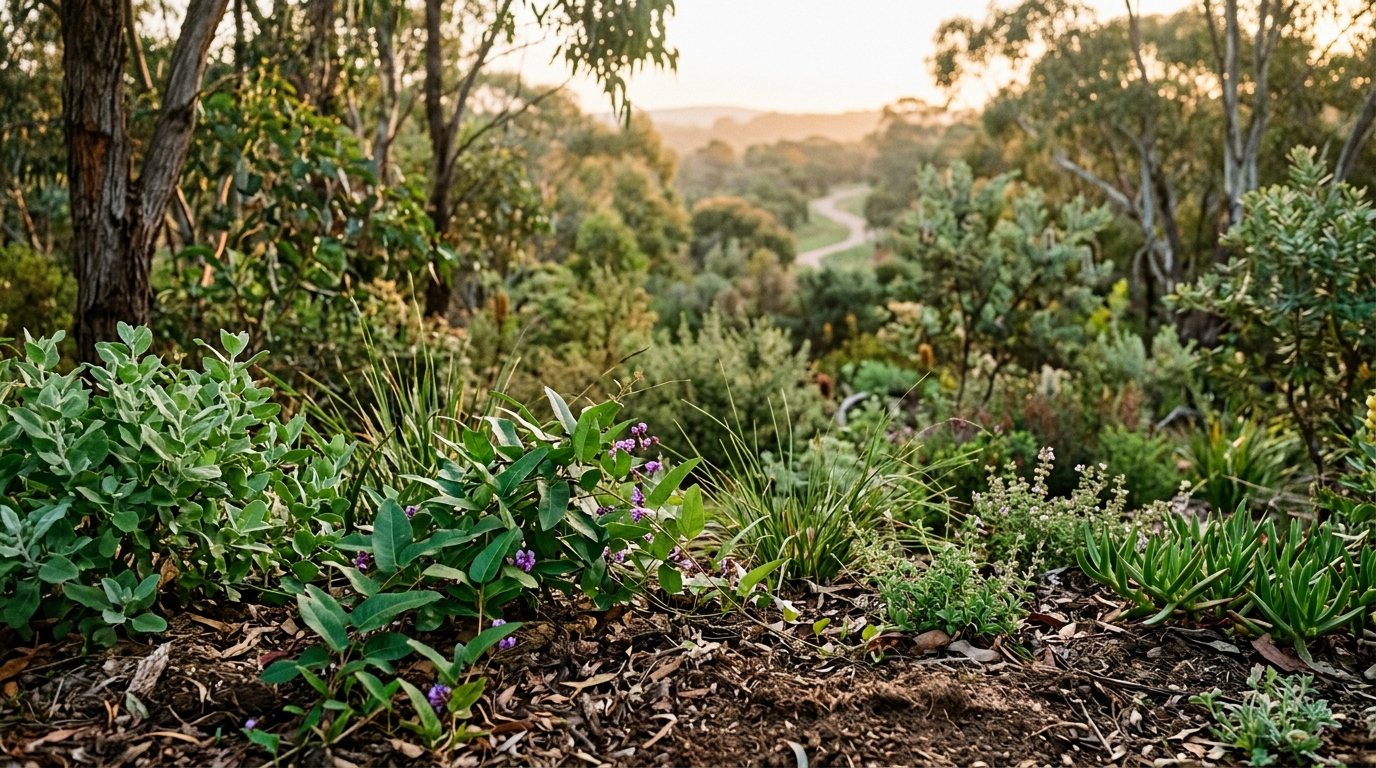
Plant medicines speak directly to our genes—activating ancient pathways for inflammation control and detoxification. Understanding how Country's foods communicate with our cellular intelligence.
There's a conversation happening inside your body right now—one that has been unfolding for tens of thousands of years. Your genes are reading the landscape through every mouthful of food, every plant compound that crosses your lips. This isn't metaphor. Modern nutrigenomics reveals what Indigenous peoples have long understood: the plants of Country carry instructions that speak directly to our cellular intelligence, switching genes on and off, modulating inflammation, supporting the body's capacity to process and eliminate what doesn't belong.
At the heart of this conversation sit genetic pathways with names like NF-κB, PXR, and Nrf2—molecular switches that govern inflammation and detoxification. NF-κB acts as a master regulator of inflammatory responses, determining whether your immune system simmers quietly or roars into action. PXR helps coordinate how your liver processes environmental compounds and toxins. Nrf2 activates a suite of protective genes that defend cells against oxidative stress and support phase-two detoxification. These aren't isolated mechanisms—they're interwoven networks that respond dynamically to the chemical information arriving from your environment, particularly through food and plant medicine.
Research into willow bark extract offers a window into these nutrigenomic conversations. Studies examining its effects on monocytes and macrophages—immune cells that patrol tissues and orchestrate inflammatory responses—demonstrate how plant compounds can modulate genetic expression at the cellular level. The salicylates and polyphenols in willow bark don't simply suppress inflammation bluntly; they appear to communicate with immune cells, influencing which genes those cells express and how vigorously they respond to perceived threats. This is precision medicine encoded in bark—the kind of intelligence that emerges from millennia of co-evolution between plants and the bodies that have lived alongside them.
First Nations Australians have understood this relationship through direct observation and transmission of knowledge across countless generations. When Elders speak of plants having 'strong medicine' or foods from Country keeping people well, they're describing the same phenomenon modern science now maps through gene expression studies. Plants like Davidson plum, Kakadu plum, and various native mints carry potent polyphenols and other bioactive compounds that likely influence these same pathways—activating Nrf2 to boost antioxidant defences, modulating NF-κB to keep inflammation balanced, supporting the body's detoxification capacity. The specificity matters: these are plants that have grown in relationship with this land and the people who have cared for it, carrying chemical signatures shaped by Australian soils, weather patterns, and ecosystems.
What nutrigenomics adds to ancestral understanding is granular detail about mechanism—the ability to trace how a polyphenol from finger lime or the unique compounds in lemon myrtle might interact with specific genetic switches. This isn't about replacing Indigenous knowledge; it's about deepening respect for the precision already embedded in traditional food systems. When you eat seasonally from Country, you're not just obtaining nutrients in the conventional sense—you're receiving information that your genome knows how to read, instructions that help calibrate inflammation, support detoxification pathways, and maintain the cellular balance we call health.
The practical implications ripple outward. In a world where chronic inflammation underpins most modern illness and where environmental toxin exposure has become unavoidable, understanding nutrigenomics offers a pathway to personalized, proactive care. By incorporating Australian native foods rich in polyphenols, supporting liver detoxification through plants that activate PXR and Nrf2, and reducing pro-inflammatory inputs, we work with our genetic inheritance rather than against it. This is caring for body as an extension of caring for Country—recognizing that the intelligence needed for healing doesn't originate in laboratories but in the living relationship between land, plant, and person.
Precision nutrigenomics, approached with humility, becomes a tool for listening more carefully to what Country has been saying all along. Your genes are waiting to read the landscape. The question is whether you're offering them the texts they were designed to understand—the chemical poetry written in native foods, the anti-inflammatory wisdom encoded in bark and leaf and fruit, the detoxification support that emerges when you eat in accordance with place. This is medicine at the intersection of cutting-edge science and timeless knowing, where the most sophisticated genetic research circles back to the simplest truth: the land provides what the body needs, if we remember how to listen.