Precision Medicine · First Nations Australia × Modern science
Night Signals and Earth Rhythms: Hormones, Darkness and Breast Tissue Health
3 min read
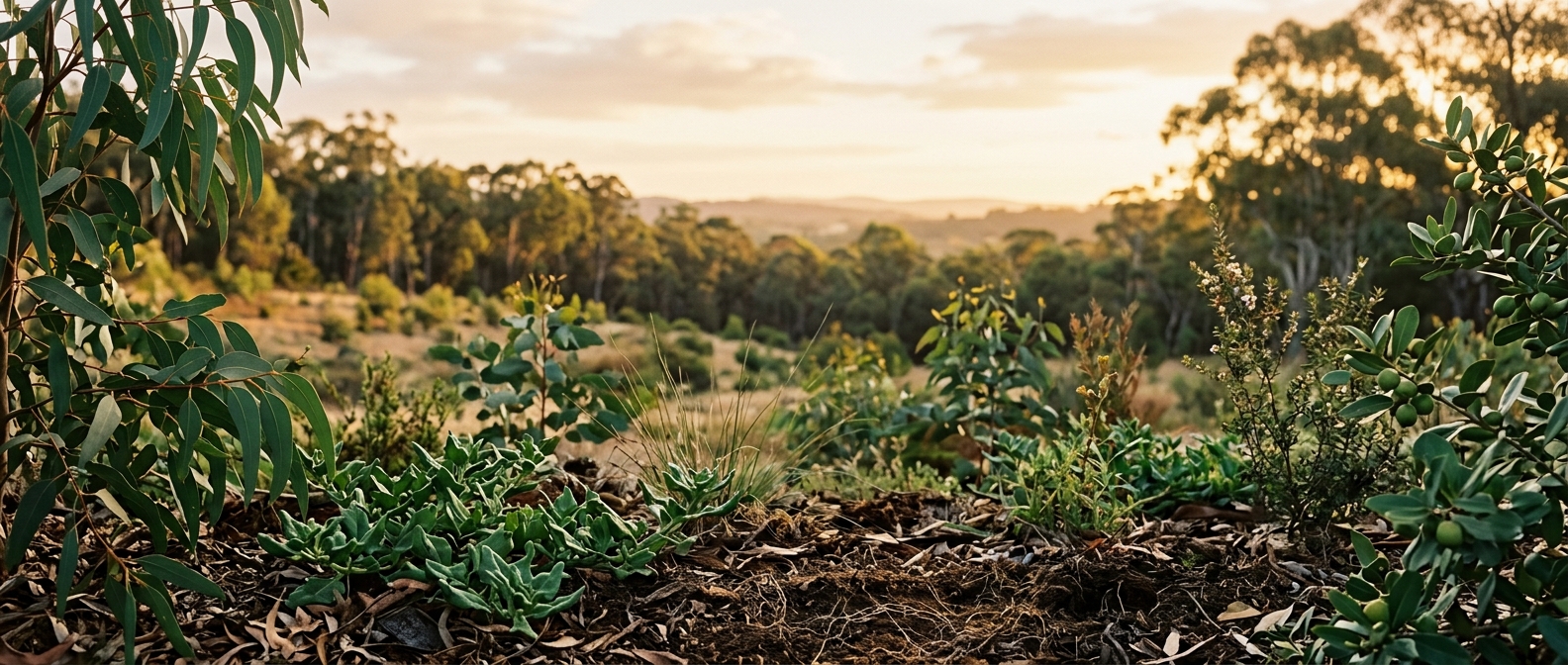
The dance of steroid hormones, melatonin and stress messengers shapes breast tissue health across a lifetime—a precision lens on how light, Country connection and metabolic pathways converge.
Breast cancer emerges not from a single misstep but from years of conversation between hormones, metabolism, circadian rhythms and the cellular environment of breast tissue itself. Precision medicine invites us to see this not as abstract pathology but as a deeply personal metabolic story—one shaped by how our bodies make, transform and clear steroid hormones like oestrogen and progesterone, how darkness signals through melatonin, and how the stress-response catecholamines adrenaline and noradrenaline influence tissue behaviour over time. For First Nations women and all women walking this Country, understanding these interconnected pathways offers a map for sovereignty over our own cellular terrain.
Oestrogen metabolism sits at the heart of this story. Our bodies don't produce a single oestrogen but a family of them, and how we metabolise oestradiol—the most potent form—determines whether breakdown products are protective or proliferative. The liver transforms oestrogen through specific enzyme pathways, producing metabolites known as 2-hydroxy (generally protective), 4-hydroxy (potentially DNA-damaging) and 16-alpha-hydroxy (more growth-promoting) forms. The balance between these pathways, influenced by genetics, gut microbiome health, nutrient status and toxin load, shapes long-term breast tissue exposure. Gangulu knowledge recognises that medicine comes from Country—and indeed, compounds in native foods like Kakadu plum, Davidson plum and wild rosella influence these very detoxification pathways through their dense phytonutrient profiles, supporting the body's ability to process and clear hormones efficiently.
Melatonin, the hormone of darkness, plays a vastly underappreciated role in breast health. Produced by the pineal gland in response to true night, melatonin is not merely a sleep signal—it acts as a potent antioxidant, modulates oestrogen receptor activity, influences aromatase (the enzyme that makes oestrogen in breast tissue), and directly suppresses mechanisms that drive abnormal cell growth. Chronic light-at-night exposure, shift work and screen time all suppress melatonin production, creating a metabolic environment that favours proliferation. First Nations peoples have always known that night is medicine, that darkness restores, that the rhythms of Country are not optional. Modern precision medicine now confirms this: women with chronically low melatonin or disrupted circadian biology show measurably different risk profiles for hormone-sensitive cancers. Caring for Country means caring for our relationship with darkness, recognising that electric light, while useful, has metabolic consequences we must attend to.
Catecholamines—the stress hormones adrenaline and noradrenaline—complete this triad. Chronic activation of the sympathetic nervous system, whether from psychological stress, inflammation, blood sugar dysregulation or disconnection from land and kin, elevates these messengers. Emerging research shows that catecholamines don't just affect mood and heart rate; they signal directly to breast tissue, influencing processes like angiogenesis (new blood vessel formation), immune surveillance and the behaviour of stem-like cells within tumours. The stress-inflammation-hormone axis is not separate from the oestrogen story or the melatonin story—it is interwoven. When we live in a state of chronic stress, disconnected from cyclical rest, from nourishing food, from Country, we are metabolically priming an environment that can, over decades, shift tissue behaviour.
Precision medicine testing now allows us to measure these pathways with nuance: urinary hormone metabolite testing maps exactly how an individual woman is breaking down oestrogen; salivary melatonin profiles reveal circadian rhythm integrity; and markers of catecholamine metabolism and cortisol patterns illuminate the chronic stress landscape.
This is not about fear or determinism—it is about information that restores agency. A woman whose testing shows poor 2-hydroxy oestrogen metabolism and low melatonin has specific, actionable pathways to support: cruciferous vegetables and native greens to support enzyme activity, darkness hygiene, magnesium-rich bush foods, movement that connects her back to body and earth, reduction of endocrine-disrupting chemicals that compete for the same detox pathways.
First Nations science has always understood that health is relational—to land, to kin, to rhythm, to food as medicine. The precision medicine view of breast cancer risk through the lens of hormone metabolism is not a departure from this knowing but a molecular confirmation of it. When we support oestrogen clearance with plant medicines from Country, when we protect our melatonin rhythms by honouring darkness, when we attend to the chronic stress load that comes from colonisation, disconnection and modern pace, we are not merely reducing risk factors—we are reclaiming our bodies as sovereign country, tending our own metabolic terrain with the same care our ancestors tended land.
Breast health across a lifetime is not a lottery. It is a conversation between our genes, our environment, our rhythms and our choices—and precision medicine offers the language to hear that conversation clearly, while First Nations wisdom reminds us that the deepest medicine has always been here, in the plants, the darkness, the earth, and the knowledge that caring for ourselves and caring for Country are one and the same practice.